
Entrepreneurial careers are often associated with innovation, creativity and a sense of freedom that traditional careers may not always offer. However, it is not widely known that research indicates that entrepreneurship is tied to some unique health concerns and trade-offs.
Issues surrounding health and entrepreneurship impact over 44 million self-employed adults in the United States alone. Research suggests that while people who start their own businesses are physically healthier than those working traditional, full-time jobs, the self-employed tend to experience more mental health issues.
Tim Michaelis, assistant professor in NIU’s Department of Management, is at the forefront of this issue. Each fall, he coordinates the Health and Entrepreneurship Research Forum in Chicago, which he founded in 2022, to bring together thought leaders in entrepreneurial health research.
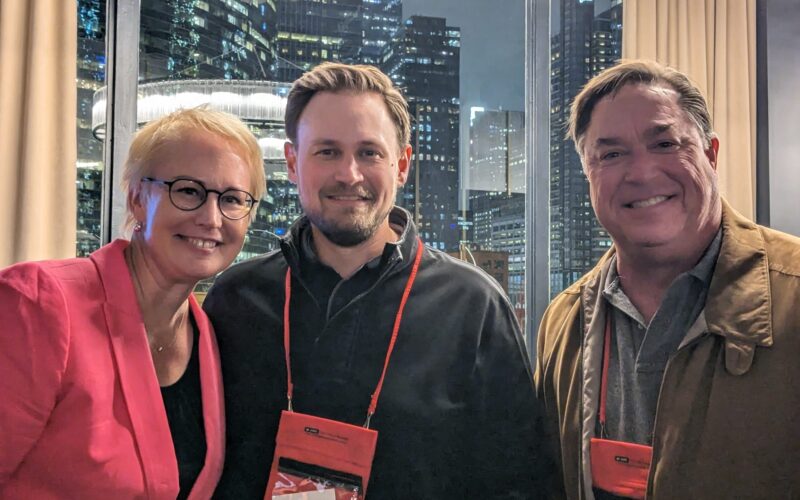
In October, this forum brought scholars and practitioners from 35 universities and 10 countries to health care startup incubator MATTER’s headquarters in Chicago. Attendees collaborated on fresh ideas and diverse perspectives on health and new venture creation, aiming to accelerate research in this essential area.
This conference is the first sustaining research-focused forum on the topic of health in entrepreneurship in the United States. There are many universities and researchers who have already invested in research to improve the health of entrepreneurs. NIU, along with our cohosts at DePaul University and NC State University, are looking to provide structure to this community in hopes of facilitating rigorous research for years to come.
Michaelis is passionate about bringing together experts in this area. As an expert in entrepreneurial frugality, it is a space he cares about.
“At a high level, there already exists a lot of research focusing on the health of employees such as work stress and job burnout, but very little research focuses on those who are self-employed like entrepreneurs,” he said. “According to the United States Census [Bureau], the self-employed represent about 16.5 million working adults who create a lot of economic value, employing half of the working population. It seems shocking to me that we are not researching more about how to keep this large population of people healthy. This is the primary motivation behind our conference.”
At large research conferences, it can be difficult to meet people and engage on a specific topic.
Michaelis wanted to make this forum smaller and more accessible for its attendees.“I saw an opportunity to create a conference to share the most current research on entrepreneur health and to do so in a way that allowed for closer collaboration and engagement across multiple institutions worldwide,” Michaelis said.
In his role at NIU, Michaelis recently co-authored a study about the implications of work/health
resource trade-offs for self-employed people, which was published in the Journal of Business Venturing Insights. His research showed that resourcefulness behaviors are a factor influencing the health and well-being of entrepreneurs. Along with this, self-employed adults in the United States engage in higher amounts of health care-related resourceful behaviors, such as skipping medication to save money, than traditional wage employees. Concerns over health care access and affordability serve as antecedents to health resourcefulness behaviors among all working adults, and younger self-employed adults engage in health resourcefulness behaviors due to health care affordability concerns. Older, self-employed adults engage in health resourcefulness behaviors due to health care access concerns.
While this unique research community is only beginning to take shape, Michaelis notes that data show simple things like sleeping at least six to eight hours per night, taking breaks from work and finding a community to engage with to reduce feelings of isolation and loneliness can have positive effects on one’s business and health. A recent Meta-Gallup survey found that nearly 25% of adults from across 142 countries are experiencing severe loneliness, and this can be even more pronounced for entrepreneurs starting a business.
“Aside from the research, we also engage a panel of entrepreneurs every year at our conference to share ideas on how researchers can address the health issues of the self-employed,” Michaelis said. “They explain that improving sleep and finding a community of peers have been practical steps to improving their health.”
The community continues to grow, with the third annual Health in Entrepreneurship conference will be hosted by Montpellier Business School in France for 2024.
“We are currently looking to move the conference to different universities around the world in future years. We hope to build a strong research community aimed at tackling the very real problem of improving entrepreneurs’ health,” Michaelis said.
Michaelis also credits the support of passionate and engaged donors for making the conference possible. Mike and Kristina McGrath provided a generous gift to the College of Business’s management department to advance entrepreneurship research and education, which allowed for the first conference to be formed. The Kauffman Foundation and the University of North Texas provided support for the 2023 conference.
“These donors and gifts that support high-quality research make it possible to sustain large-scale initiatives focused at changing the conversation on entrepreneur health,” Michaelis said. “I hope rigorous research on how to improve the lives of entrepreneurs will result in practical,
evidence-based solutions for improving the health of entrepreneurs, thus hopefully improving their businesses and the economy overall.”
